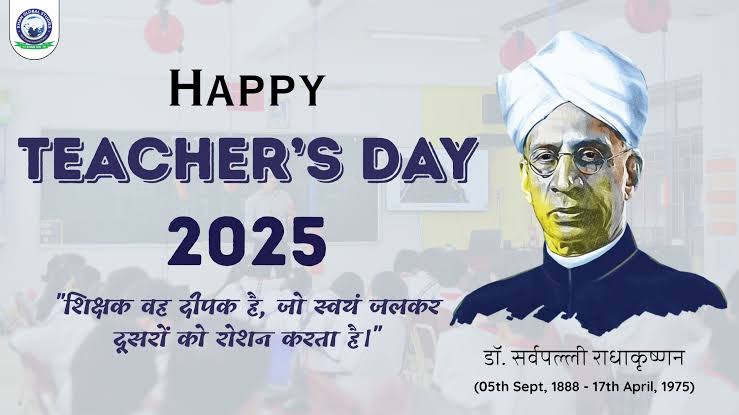
Teacher’s Day in India is celebrated on September 5. The date coincides with the birthday of Dr. Sarvepalli Radhakrishnan, a philosopher and India’s second president. Revelations about Radhakrishnan’s alleged plagiarism and controversial views on women have raised questions about the appropriateness of celebrating his birthday as Teacher’s Day. Radhakrishnan’s philosophy was grounded in Advaita Vedanta, reinterpreting this tradition for a contemporary understanding.
In January 1929, Jadunath Sinha, a relatively unknown lecturer of philosophy at Meerut College, accused Radhakrishnan of extensive plagiarism. Sinha claimed that Radhakrishnan had plagiarised from the first two parts of his thesis, titled ‘Indian Psychology of Perception, Vol I & Vol II,’ which were submitted to Calcutta University for the Premchand Roychand Studentship in 1922.
The allegations, pertained to Radhakrishnan’s book ‘Indian Philosophy Vol. II,’ published in 1927, which allegedly incorporated stolen paragraphs from Sinha’s thesis. Radhakrishnan had published another book titled The Vedanta according to Sankara and Ramanuja in 1928, which was actually a reprint of Chapters 8 and 9 of his book “Indian Philosophy Vol. II.” That book also had extensive pirated paragraphs from Sinha’s Premchand Roychand Studentship thesis. Sinha had published extracts from those two parts of his Premchand Roychand Studentship thesis in the Meerut College Magazines of 1924 and 1926.
After writing letters about this matter, which were published in the Modern Review magazine, and defamation from Radhakrishnan, Sinha sued him in the Calcutta high court for infringement of copyrights of his original literary works. There was a lot of pressure on Sinha to settle the case out of court. Sinha didn’t have the wherewithal to fight a prolonged legal battle.
On the other hand, Radhakrishnan had both financial and social capital to manipulate, manage and obtain the help of his friends, especially that of Shyamaprasad Mukherjee, son of Sir Ashutosh Mukheriee the then vice chancellor of Calcutta University, brought Radhakrishnan from Bangalore to Calcutta University for the prestigious post of King George V Professorship.
The only book on Radhakirishnan’s plagiarism, titled A Reported case of Radhakrishnan’s Literary Piracy by Barin De, based on the documents submitted by Sinha in the court, vanished from the libraries in India. The plagiarism allegations against Radhakrishnan cast a shadow over his legacy as an educator and philosopher but also challenge the principles of academic honesty and authenticity.
Aside from the plagiarism allegations, Radhakrishnan’s views on women have also raised eyebrows. He believed that the role of women was best fulfilled within the confines of marriage and motherhood. Notably, Radhakrishnan arranged the marriages of his daughters without their consent, and some of them were married off at a very young age, as mentioned in Radhakrishnan’s biography written by his son Sarvepalli Gopal.
The juxtaposition of his traditional views on women with his celebrated role as an educator, then, seem hypocritical. Celebrating a figure who held such views as the symbol of Teacher’s Day may send the wrong message about the values that educators should uphold, including gender equality and women’s rights.
About the Author

Dr. K. Raja Gopal Reddy is a seasoned internationally qualified Insurance professional. What you are reading here, may not answer all the questions we have, but has the absolute power of asking unsettling questions which increase the interest in the strange world, and show the contradictory wonders lying just below the surface of the commonest things of life. Look at this disturbing but beautiful thought of Friedrich Nietzsche “God is dead. God remains dead. And we have killed him”.
Dr. Reddy can be reached at: raja66gopal@gmail.com