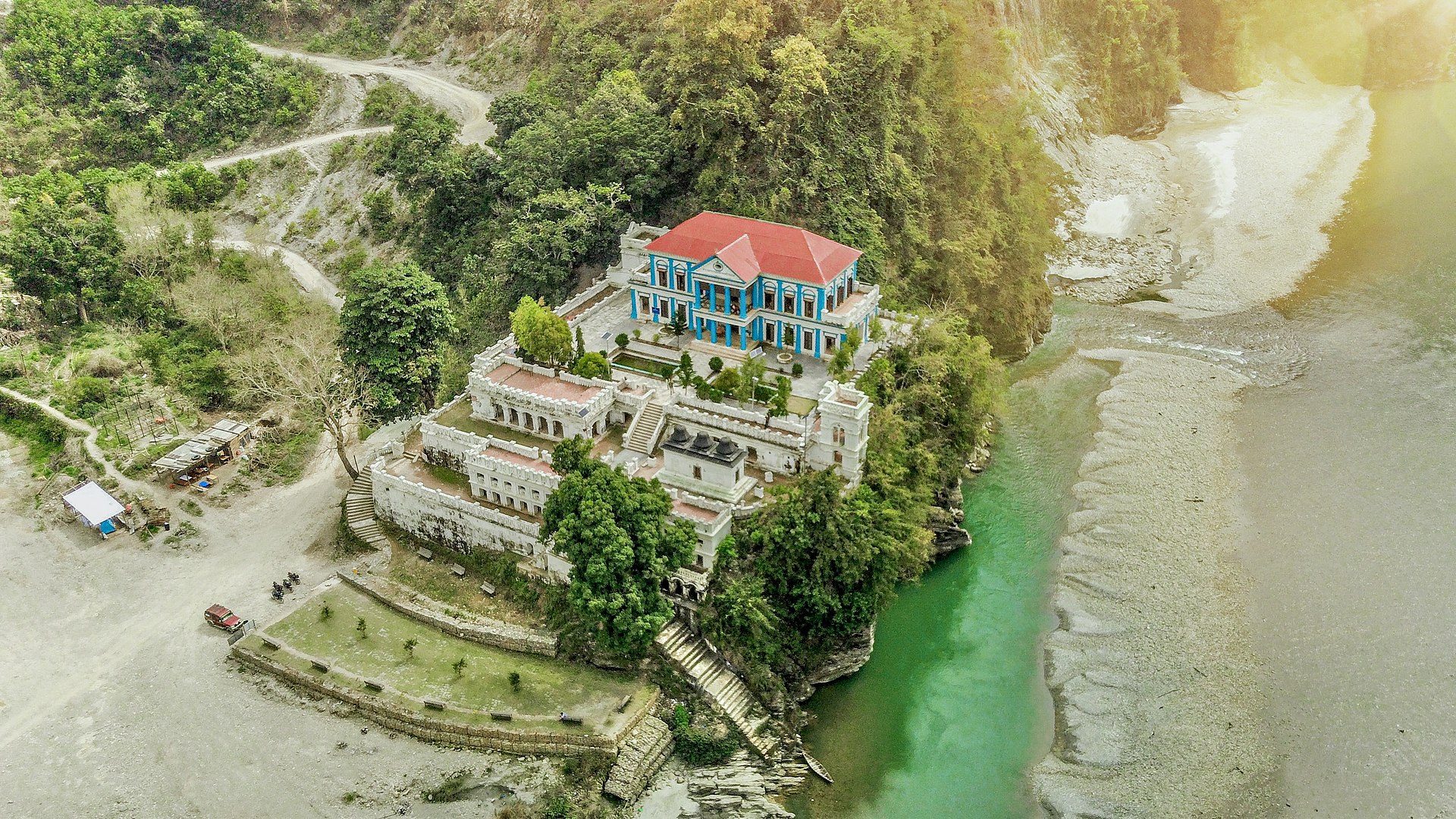

We have recently visited the Rani Mahal in Nepal. The name Rani Mahal literally translates as Queen’s Palace. Historically speaking, in 1885 Khadga Samsher Rana assassinated Ranauddip Shamsher Rana to make Bir Shumsher Jung Bahadur Rana as the prime minister and himself as the Commander in Chief of Nepal. He was in the line of succession for the next prime minister.
In 1887, in an unsuccessful coup attempt, Khadga Samsher conspired to remove Bir Shumsher Jung Bahadur Rana from prime-ministership. For this, he was arrested and forced to drop his royal titles and the position of Commander in Chief and was banished to Thada, a place in Gulmi district in Nepal.
In 1888, a limited power was reinstated by assigning as the Governor General and the commander in chief of western Nepal and allowed to relocate in Palpa-Gauda. At Palpa-Gauda, Khadga Shumsher’s youngest wife Tej Kumari Devi died in 1892. To commemorate his grief and the queen’s last wish to construct a place of pilgrim, Khadga decided to build a palace. Thus, this palace was constructed by General Khadga Shamsher Jang Bahadur Rana in 1893. Over the period, Ranighat Palace or Rani Mahal became a historic palace. It is located on the banks of river Kali Gandaki.
The palace was designed by a British architect, and construction workers were brought from India besides the four-army platoon under Khadga Shumsher at Palpa and local villagers. For the construction forced labour was also used. For example, Agri, a community of special caste, was employed to break the rock along the road to the palace and the foundation of the palace building. It took four years to complete the construction. The nearby forest is named as Rani Ban (Queen’s forest) along with naming the Ghats as Rani Ghat.
In 1902, Khadga Samsher Rana along with his family fled to India abandoning Rani Mahal, and leaving it without proper owner or caretaker. Rani Mahal was on the verge of turning into rubble. The poor condition of the palace became a concern for the government of Nepal. In 2017, the Government of Nepal allocated budget and restored the palace to the original state. A museum was also established in the building.
Now the Rani Mahal stands alone and silently on the banks of river Gandaki. If you listen carefully, you can hear the love whispers of Khadga Shumsher and Tej Kumari Devi from the thick walls of the palace.
About the Author

Dr. K. Raja Gopal Reddy is a seasoned internationally qualified Insurance professional. What you are reading here, may not answer all the questions we have, but has the absolute power of asking unsettling questions which increase the interest in the strange world, and show the contradictory wonders lying just below the surface of the commonest things of life. Look at this disturbing but beautiful thought of Friedrich Nietzsche “God is dead. God remains dead. And we have killed him”.
Dr. Reddy can be reached at: raja66gopal@gmail.com