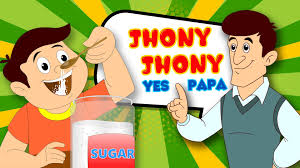
This is an English-language children’s poem, said to have originated in Kenya in the 1980s. This song is about a child who is being questioned by his father whether he had eaten sugar. For children, it is a whole lot of fun to meet Johnny and his papa. This is one of the most loved nursery rhymes by kids across the globe.
For those of you who cannot recall this poem (which is impossible!), allow me to quote the entire Nursery Rhyme here:
‘Johnny, Johnny,
Yes, Papa.
Eating sugar?
No, Papa.
Are you Sure?
Yes Pappa.
Open your mouth.
Ha ha ha!’
There are many other versions of the same Nursery Rhyme, but discussion about those versions is irrelevant here. What is relevant here is: What does this poem teach? What is it the children are going to learn? What impression will this poem make on their mind?
In this Nursery Rhyme, a father is questioning Johnny whether he had stolen and eaten sugar. In other words, the young Johnny is being accused of stealing and eating sugar! The kid could be truthful. He may not be telling lies. Yet his own father is accusing him! In a way, the father is etching on the mind of Johnny that there are two concepts – stealing and lying!
Okay! Johnny has opened his mouth. He said “Ha ha ha.” After opening the mouth, what? Did the father find sugar in Johnny’s mouth? Was it established that Johnny had stolen, eaten sugar and told lies to his own father? Don’t you think that by learning this poem, the child will begin to understand that he can steal and eat and could lie. He could even deny stealing sugar. Is this what we teach children?
Let us further assume that Johnny has opened his mouth, said, “Ha ha ha.” Papa did not find sugar in the mouth. Then what? Johnny was wrongly accused. Papa did not even admit that Johnny was wrongly accused of stealing and eating sugar.
From all this, it is clear what Johnny would do when he grows up, should he learn the philosophy of this Nursery Rhyme.
About the Author

Dr. K. Raja Gopal Reddy is a seasoned internationally qualified Insurance professional. What you are reading here, may not answer all the questions we have, but has the absolute power of asking unsettling questions which increase the interest in the strange world, and show the contradictory wonders lying just below the surface of the commonest things of life. Look at this disturbing but beautiful thought of Friedrich Nietzsche “God is dead. God remains dead. And we have killed him”. Dr. Reddy can be reached at: raja66gopal@gmail.com