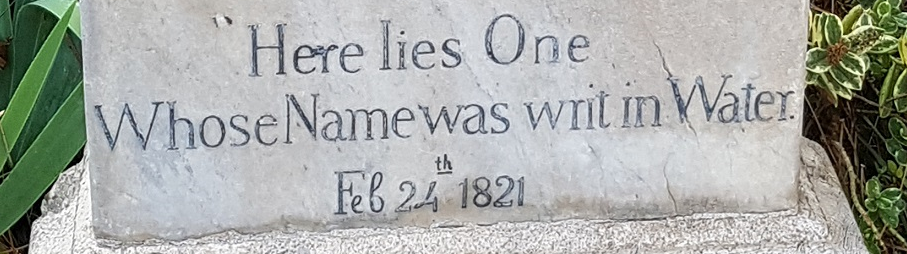
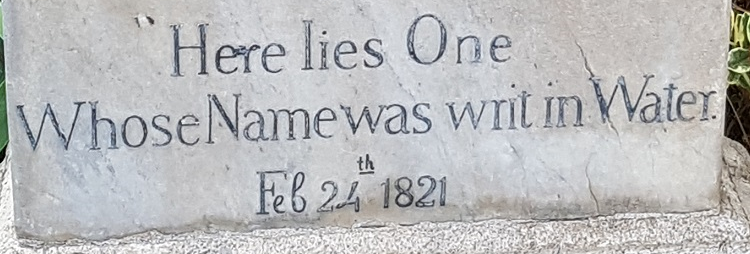
I came across this epitaph in an article published in the Reader’s Digest magazine of January, 1996 this morning. John Keats’ epitaph is among the most famous in history. What does it mean? How to face the inevitability of death?
When he realized he was dying, Keats asked his friends to memorialize him with those words. He didn’t even want his name on the gravestone. All his life, Keats had been surrounded by death. His entire family had been afflicted with consumption, which had no cure, and they had preceded him in death. When he began to cough up blood, he knew his time was coming and determined to live out his last days in Rome, writing poetry and taking in the last precious days of beauty that were left to him.
Preparing for death Keats took a room near the Barcaccia fountain. He understood that his own time was passing and used the remaining time to seek out eternity. In his mind, the truth of our eternal destiny is discovered by contemplating beauty. In a letter to a friend, Keats writes, “How astonishingly does the chance of leaving the world impress a sense of its natural beauties on us…I muse with the greatest affection on every flower I have known from my infancy…” In acknowledging his own departure, he is given back the time. He is given back everything.
How different this is from how most of us approach death! We ignore it, distract ourselves, and refuse to speak of it. But in refusing to contemplate death, we also lose the poignancy of our lives. We do not prepare for a good ending and lose the goodness of the journey. Death carries a vicious sting. One of Keats’ poems, “To Autumn,” is one of those poems that people have claimed they cannot read without tears in their eyes. It’s a testament of beauty written by a departing man.
“Here lies One Whose Name was writ in Water” Keats may be right about names being writ in water, but he has also written into the hearts of the people. They love him till eternity. And if our hearts break at the thought of death, it is through the breaking that eternity enters in.
About the Author

Dr. K. Raja Gopal Reddy is a seasoned internationally qualified Insurance professional. What you are reading here, may not answer all the questions we have, but has the absolute power of asking unsettling questions which increase the interest in the strange world, and show the contradictory wonders lying just below the surface of the commonest things of life. Look at this disturbing but beautiful thought of Friedrich Nietzsche “God is dead. God remains dead. And we have killed him”.
Dr. Reddy can be reached at: raja66gopal@gmail.com